2015年5月24日 星期日

以《聖經標準價值》立國

目前,世界上的局勢是民主體制陣營與共產主義體制陣營在竭力對決當中,曾經出現一個很大幅度的變化,就是很多國家紛紛從專制體制改革轉為民主化體制的國家,而共產主義帶頭的蘇俄也急轉為民主化體制,僅僅剩下中國、古巴、朝鮮、越南等國家還在繼續或是支持共產主義體制,很明顯民主體制陣營已經佔上了上風。 但是,就在近20年,以美國為首的歐美民主體制國家突然出現了很大的經濟危機與道德危機,而共產主義的中國卻一夜暴富,成為舉世矚目的經濟大國,這不是很滑稽的事情嗎?從制度方面來講,民主體制的法制、自由與福利制度是遠超於有法不遵,表面福利、與愚弄自己民眾的共產體制,那為何民主體制國家的經濟與道德這麼快就走下坡路,而無道也無德的共產主義體制的經濟卻能從世界非議中脫穎而出呢?這一點可能至今歐美國家的分析家們還在做夢當中,有很多專家可能會說:“他們是不擇手段”,民主體制是小政府大民眾,共產體制是大政府小民眾,又或者是鄧小平所主導的改革開放鑄造了資本市場的成功等等,真實情況是這樣嗎? I、要談一種制度,其中的發展歷史非常重要,先談民主,就拿美國來做典範舉例。美國,由五月花號的那些可憐的避難者開始,發展至今日雄霸世界的超級大國,為何在短短幾百年就能有如此的成就呢?而那些號稱幾千年文化古國中國、印度與中東國家卻在自我消亡中內耗?美國先輩們把功勞歸給信仰耶穌基督,而當代的美國人可能會把功勞歸給民主體制,並且還會引以為傲,為何會這樣呢?這也是當代美國為何經濟與道德衰敗的原因。因為,起初美國五月花號裡的先輩都是虔誠的基督徒,雖然他們登陸後曾經經歷災難與飢荒,但是他們有堅實的信仰,從聖經的角度講是【信靠上帝】,他們就必蒙福。《聖經》詩篇1章:1 -3節講;不從惡人的計謀、不站罪人的道路、不坐褻慢人的座位、惟喜愛耶和華的律法、晝夜思想、這人便為有福。他要像一棵樹栽在溪水旁、按時候結果子、葉子也不枯乾,凡他所作的、盡都順利。這是上帝祝福義人的標準,而當時的美國先輩們願意謙卑,以耶穌基督為他們個人中心與國家的中心,所以,上帝的祝福很自然就臨到他們。但是後來,美國的後輩們追求民主、以個人為中心,把上帝從學校與國會裡趕走,過度強調個人慾望的享受主義,拜偶像、同性戀等,走舊約以色列人當初所走的悖逆上帝的老路,所以,上帝的審判也很快就臨到了美國,其中最大原因是美國成為宗教熔爐,接納撒旦教、共濟會、法輪功等黑暗勢力,並且容忍同性戀立法,交鬼與淫亂這些都是聖經所禁止的事情,美國犯了這些罪後不思悔改,還鼓勵其他國家也接納同性戀立法,所以,傲慢的美國經濟危機的導火線也從他們曾經引以為傲的房地產業與金融業開始,並且,現在開始要顧忌到中國的臉色。正好應驗《聖經》申命記第五章所講的,申命記5章7節-9節: 除了我以外、你不可有別的神。不可為自己雕刻偶像,也不可作甚麼形像、彷彿上天、下地、和地底下水中的百物。不可跪拜那些像、也不可事奉他、因為我耶和華你的 神、是忌邪的 神、恨我的、我必追討他的罪、自父及子、直到三四代。 美國雖然有很好迎合人私慾與生活條件的法制,但是由於在信仰的源頭墮落了,所以,美國的經濟與社會也隨之墮落,美國現在本可以好好的支持以色列、保護以色列,但是奧巴馬不甘寂寞,想彰顯個人在的中東的政治影響力,暗中支持伊朗核計劃,這些都是會給美國帶來災難的舉動,因為聖經明顯的講明,以色列是上帝眼中的瞳仁,支持以色列必蒙上帝賜福,而敵對以色列必獲災難,這是屬靈原則,曾經以耶穌基督立國的美國為何鄙視聖經的屬靈原則呢? II、共產制度又是什麼呢?從歷史角度來看,共產主義制度僅僅是一個幻想,幻想能達到什麼樣的境界,但是由於這些幻想沒有標準、沒有先例、沒有經驗,所以也沒有人能講得清楚,當時趕走蔣介石之後,毛澤東很快就與斯大林翻臉,採用中國封建思想來管制中國內地,屠殺革命同志,蒙蔽民眾,是個六神無主的虛幻迷霧,到今天共產主義分子也講不清楚他們到底想要什麼?能表達些什麼?由於拒絕真理信仰與逼迫基督徒,所以,道德很自然陷入危險當中,雖然經濟富裕一點了,但是從道德層面講,就像一個沒有靈魂的木乃伊或者是無良知的暴發戶,正如《聖經》詩篇1章4-6節講: “惡人並不是這樣、乃像糠秕被風吹散。因此當審判的時候、惡人必站立不住,罪人在義人的會中、也是如此。因為耶和華知道義人的道路,惡人的道路、卻必滅”亡。 可是,疑問就在這裡了,共產主義是反對《聖經》的是無神論的宗教,為何今天中國經濟能有如此成就呢?問得好,由於共產主義體制是無神論宗教,所以,他們不必顧忌道德與職業標準,凡事以利益為先,用收買、利誘、威脅、逼迫、竊取、毀壞等各種手段來達到目的,看那些貪官就知道了。克林頓政府與小布什政府不懂共產主義手段,所以,給共產主義體制送去很大的禮物,那兩個政府當政時期是共產主義經濟擴張的黃金時刻,今天的奧巴馬政府是懂一點又不懂一點,所以才會渾渾噩噩的軍事上圍堵,但是經濟上又向共產主義國家借貸,那不是很丟人嗎?美國人現在想亡羊補牢了,用各種補救手法來牽制共產國家,但是,為時已晚,因為經濟主動權已經移位。
III、《聖經價值》是什麼呢?也可以稱為聖經標準,是信仰標準,也可以稱為屬靈原則,是信仰所結的果子,是理智的、主動的、有權柄的、有力量的、又是有節制的,也是祛宗教情緒的,因為宗教往往是帶有目地的、想達到權力與金錢等控制地位。《聖經價值》乃是透過落實上帝在聖經上說的話語在日常生活當中,不是帶有政治目的,乃是從改變人的靈魂、思想與日常生活習慣開始,使個人富有行動力去愛上帝,愛別人,彼此祝福,是以上帝為個人中心與生命中心,並且,敢於拒絕黑暗勢力與潛規則,從心裡除去有型與無形的偶像、主動棄絕淫亂的行為,滿有憐憫心,做個聖潔、喜樂、主動幫助別人的人,把天國的標準落實在個人的生命裡面與生活裡面。 從歷史角度來講,羅馬君士坦丁大帝統治時期與英國崛起成為日不落帝國,到美國的崛起都有聖經標準的影子,只是之前的國家過度高舉政治與宗教權柄,信仰錯位而忽略耶穌基督的本身才走回頭路的,他們沒有把耶穌基督來到世界上是救贖罪人的真理灌輸到各階層的民眾,也沒有把耶穌憐憫弱者的心懷傳播開來,而是建立精英治國、貴族治國等反聖經標準。請不要忘記,耶穌基督自己才是道路、真理與生命。如果是帶有政治目的、宗教目的、個人目的去做這件事情必然變樣,因為是人自己的想法,貪圖權利與名利,不是上帝自己的想法,所以,很難繼續走下去。 《聖經標準價值》就是引導人把注意力放在耶穌基督身上,耶穌自己的教導是怎麼樣的,他自己又是怎麼做的,我們人應該怎麼樣配合才行,不是強迫性的,乃是讓人甘心樂意的去做,甘心樂意的去改變自我,主動親近上帝,享受上帝所賜的平安與喜樂。也不是帶有政治目的,乃是本於對上帝的責任與愛心去做,可以這麼說:”哪個國家導入這個新體制,哪個國家很自然就會受到上帝的祝福”!因為乃是遵從聖經:“願上帝的國降臨,願上帝的旨意行在地上如同行在天上”的教導。這不是政治,而是人類心甘情願離開邪惡靠聖經自我悔改的行動!是本與聖靈的帶領與個人良知的發現。 1、有清楚的目標:尊上帝為大為主,以耶穌基督為個人生命中心與生活中心 2、在道德層面:主動改變自己成為聖潔、公義、有憐憫心的人,並且樂於助人 3、在個人層面:敢於認錯,改錯,棄絕私慾,棄絕潛規則,虛心好學 4、在生活層面:有愛心、多忍耐、負責任,樂於溝通,樂於禱告、讚美,遵紀守法,積極主動 5、在社會層面:主動反省自我,信實、虛心、向上帝負責,服務大眾,扶持弱者,
標準經文: I、《聖經》詩篇1章:1 -3節講;不從惡人的計謀、不站罪人的道路、不坐褻慢人的座位、惟喜愛耶和華的律法、晝夜思想、這人便為有福。他要像一棵樹栽在溪水旁、按時候結果子、葉子也不枯乾,凡他所作的、盡都順利。 II、馬太福音第五章1-17節: 5:1 耶穌看見這許多的人、就上了山、既已坐下、門徒到他跟前來。 5:2 他就開口教訓他們說、 5:3 虛心的人有福了,因為天國是他們的。 5:4 哀慟的人有福了,因為他們必得安慰。 5:5 溫柔的人有福了,因為他們必承受地土。 5:6 飢渴慕義的人有福了,因為他們必得飽足。 5:7 憐恤人的人有福了,因為他們必蒙憐恤。 5:8 清心的人有福了,因為他們必得見 神。 5:9 使人和睦的人有福了,因為他們必稱為 神的兒子。 5:10 為義受逼迫的人有福了,因為天國是他們的。 5:11 人若因我辱罵你們、逼迫你們、捏造各樣壞話譭謗你們、你們就有福了。 5:12 應當歡喜快樂,因為你們在天上的賞賜是大的,在你們以前的先知、人也是這樣逼迫他們。 5:13 你們是世上的鹽,鹽若失了味、怎能叫他再鹹呢,以後無用、不過丟在外面、被人踐踏了。 5:14 你們是世上的光,城造在山上、是不能隱藏的。 5:15 人點燈、不放在斗底下、是放在燈臺上、就照亮一家的人。 5:16 你們的光也當這樣照在人前、叫他們看見你們的好行為、便將榮耀歸給你們在天上的父。 5:17 莫想我來要廢掉律法和先知,我來不是要廢掉、乃是要成全。 以上言論代表專家的意見 良藥先生

2015年4月26日 星期日

Quake death toll surges over 1,800 as rescue teams head for Nepal

Quake death toll surges over 1,800 as rescue teams head for Nepal
www.gnc7news.com Chabad house in Kathmandu says hundreds have sought shelter in damaged center after massive temblor; aid teams prepare to assist in emergency efforts Tens of thousands of Nepalese who spent the night under a chilly sky were jolted awake by strong aftershocks Sunday, and rescuers aided by international teams cleared rubble in search of survivors after a powerful earthquake killed at least 1,865 people across the Himalayan region. The death toll continued to climb as more reports came in from far-flung areas, with 1,805 in Nepal alone, said Home Ministry official Laxmi Dhakal, with at least 4,718 injured. But the overall toll was expected to be much higher, he said. The magnitude 7.8 earthquake, which originated outside the capital, Kathmandu, was the worst tremor to hit the poor South Asian nation in over 80 years. It was strong enough to be felt all across the northern part of neighboring India, Bangladesh, China’s region of Tibet and Pakistan, where a total of 60 people died. A senior trekking guide said at least 17 people had been killed after an avalanche triggered by Nepal’s massive earthquake slammed into a section of the Mount Everest mountaineering base camp. Another 61 people were injured. Most of the area were without power and water Sunday, but with Kathamandu airport reopened, first aid flights began delivering aid supplies. Workers were sending out tents and relief goods in trucks and helicopters, said disaster management official Rameshwar Dangal. In Israel, the IDF and aid organizations readied to send rescuers, paramedics and emergency supplies, while the Foreign Ministry worked to locate dozens of Israelis still unaccounted for. An advance team took off from Israel just after midnight to assess needs. A statement from Prime Minister Benjamin Netanyahu’s office said the advance team “will land near the affected zone and make its preparations until it becomes possible to land in Nepal.” The second flight was planned to include a team of 240 soldiers from the Home Front Command, who plan on working for at least the next two weeks in aiding rescue and recovery efforts for locals and Israelis there, according to Ynet news. Besides offering aid to Nepal, the delegation will also provide Israelis “the means necessary to return to Israel”, the statement added. Separate flights of other aid organizations were also planned from Israel A statement from Magen David Adom said an aircraft from Israel with equipment and professionals would depart early Sunday to provide immediate help and set up base for further delegations. Private Israeli aid group IsraAid said Saturday it was preparing a team to go to Nepal, and Israeli rescue groups Zaka and United Hatzala also planned to send delegations of medics Sunday morning. Prime Minister Benjamin Netanyahu sent a letter to Nepalese Prime Minister Sushil Koirala Saturday night and promised medical assistance and aid to finding and rescuing victims after the quake. He and President Reuven Rivlin also sent their condolences to Nepal over the disaster. “Our thoughts and hearts go out to the people of Nepal dealing with this awful disaster, and with our loved ones who are in distress. The State of Israel is reaching out to help the search and rescue of the many victims,” Rivlin said in a statement. No Israelis were known to be among the dead, the Foreign Ministry said Saturday evening, but reports listed dozens still unaccounted for in the Himalayan country popular with post-army backpackers, and many sustained light injuries. A number of families in Israel took to Facebook and WhatsApp in an attempt to find information on loved ones, as officials reported poor communication lines in the country in the wake of the disaster, amid persisting aftershocks. The Chabad house in Kathmandu, which was lightly damaged, reported that hundreds of Israelis had turned to the group for refuge following the earthquake. ““We’re still gathering the names of the missing, and we’re trying to get in touch with everyone as urgently as possible,” Chani Lifshitz, who runs the center with her Husband Rabbi Chezki Lifshitz, told the Chabad.org website. “Until now, we’ve taken care of a number of injured on the couches of the Chabad House. The main work now is to gather all the names of the people, the people who are in Katmandu, the people who are in the mountains. We hope to report only good news.” Israeli travelers at the Kathmandu Chabad House after a major earthquake on Saturday April 25, 2014. (screen capture: Channel 2) Israeli travelers at the Kathmandu Chabad House after a major earthquake on Saturday April 25, 2014. (screen capture: Channel 2) As the quake hit Saturday afternoon, residents fled homes and buildings in panic. Walls tumbled, trees swayed, power lines came crashing down and large cracks opened up on streets and walls. Clouds of dust began to swirl all around. Within hours of the quake, hospitals had filled up with hundreds of injured people, and by Sunday, their numbers swelled to nearly 5,000. Many survivors were brought to hospitals by friends and relatives in motorized rickshaws, flatbed trucks and cars. Residents used their bare hands, crowbars and other tools to dig through rubble and rescue survivors. More than two dozen aftershocks jolted the area after the first quake, which struck just before noon Saturday, and continued into Sunday. At the time, Shrish Vaidya, who runs an advertising agency, was in his two-story house outside Kathmandu with his parents. “It is hard to describe. The house was shaking like crazy. We ran out and it seemed like the road was heaving up and down,” Vaidya, 46, told The Associated Press. “I don’t remember anything like this before. Even my parents can’t remember anything this bad.” Once the first shaking stopped, Vaidya thought his family could return indoors by evening. But the jolts kept coming, and they felt safer outdoors. “It’s cold and windy so we are all sitting in the car listening to the news on FM radio,” he said. “The experts are saying it’s still not safe to go back inside. No one can predict how big the next aftershock will be.” So the family ate dinner outside with the headlights of their car providing light. Vaidya was grateful his wife and 10-year-old son were on holiday in the U.S. In his largely affluent neighborhood of low-rise, sturdy homes in suburban Kathmandu the damage was relatively light. In other parts of the city where the buildings are older and poorly built people were not as lucky. Volunteers help remove debris of a building that collapsed at Durbar Square, after an earthquake in Kathmandu, Nepal, Saturday, April 25, 2015. (photo credit: AP/Niranjan Shrestha) Volunteers help remove debris of a building that collapsed at Durbar Square, after an earthquake in Kathmandu, Nepal, Saturday, April 25, 2015. (photo credit: AP/Niranjan Shrestha) Forecasts called for rain and thunder showers Sunday and the temperatures were in the mid-50s (14 Celsius), cold enough to make camping outside uncomfortable. Thousands of people spent the night at Tudikhel, a vast open ground in the middle of Kathmandu, just next to the old city that is lined with historic buildings and narrow lanes. Now it is in ruins. “We hardly slept through the night. It was cold and it rained briefly and it was uncomfortable, but I am glad I brought my family out to the open,” said Ratna Singh, a vegetable vendor who was cuddled under a blanket with his wife and son.” “At least I knew my family were safe. Every time the ground shook at night, I thanked god my family were there with me and safe. I don’t think I am going to be sleeping inside the house anytime soon. We are all petrified.” People lay on plastic sheets or cardboard boxes, wrapped in blankets. Mothers kept their children warm; some lit fire with whatever wood they could find. Most were eating instant noodles and cookies. Indian air force planes landed with 43 tons of relief material, including tents and food, and nearly 200 rescuers, India’s External Affairs Ministry spokesman Vikas Swarup said. The planes were returning to New Delhi with Indian nationals who were stranded in Kathmandu. More aid flights were planned for Sunday. Hospitals in the Kathmandu Valley were overcrowded, running out of room for storing dead bodies and running out of emergency supplies, the United Nations said in a statement. “The reports of the devastation are still coming in and the numbers of people killed, injured and affected by this earthquake continue to rise,” UN chief Ban Ki-Moon said. “It is clear that very many lives have been lost. There has also been significant damage to Nepal’s irreplaceable cultural heritage.” Nepalese people walk past a collapsed bullding in Kathmandu after an earthquake on April 25, 2015. (photo credit: AFP/PRAKASH MATHEMA) Nepalese people walk past a collapsed bullding in Kathmandu after an earthquake on April 25, 2015. (photo credit: AFP/PRAKASH MATHEMA) The quake will likely put a huge strain on the resources of this poor country best known for Everest, the highest mountain in the world, and its rich Hindu culture. The economy of Nepal, a nation of 27.8 million people, relies heavily on tourism, principally trekking and Himalayan mountain climbing. A mountaineering guide, Ang Tshering, said an avalanche after the quake swept base camp where expeditions were preparing to scale Everest, flattening tents and killing at least 17 climbers and guides and leaving at least 61 injured and missing and others cut off. Their nationalities were not immediately known. Google executive Dan Fredinburg was the only climber killed to have been identified so far. Lawrence You, director of privacy at Google, said Fredinburg was with three other Google employees, who all survived. He added that Google.org was contributing $1 million to the response efforts. Experienced mountaineers said panic erupted at base camp, which has been “severely damaged”, while one described the avalanche as “huge”. “Huge disaster. Helped searched and rescued victims through huge debris area. Many dead. Much more badly injured. More to die if not heli asap,” tweeted Romanian climber Alex Gavan from base camp. Gyanendra Kumar Shrestha, an official in Nepal’s tourism department, told AFP: “We are trying to assess how many are injured. There might be over 1,000 people there right now, including foreign climbers and Nepalese supporting staff.” AFP Nepal bureau chief Ammu Kannampilly, on an assignment to Everest together with a colleague, was among those caught up in the chaos. “We are both ok… snowing here so no choppers coming,” she said in an SMS on an approach to base camp. “I hurt my hand — got it bandaged and told to keep it upright to stop the bleeding.” Carsten Lillelund Pedersen, a Dane who was climbing the Everest with a Belgian, Jelle Veyt, said on his Facebook page that they were at Khumbu Icefall , a rugged area of collapsed ice and snow close to base camp at 5,000 meters (16,500 feet) when the earthquake hit. “Right now, it is pretty chaotic and we try to help those injured,” Danish climber Carsten Lillelund Pedersen said on his Facebook page. Tents are seen set up for climbers on the Khumbu Glacier, with Mount Khumbutse, center, and Khumbu Icefall, right, seen in background, at Everest Base Camp in Nepal on April 11, 2015. An avalanche triggered by a massive earthquake in Nepal smashed into a base camp between the Khumbu Icefall, a notoriously treacherous rugged area of collapsed ice and snow, and the base camp where most climbing expeditions are, said Ang Tshering of the Nepal Mountaineering Association. (photo credit: AP Photo/Tashi Sherpa, File) Tents are seen set up for climbers on the Khumbu Glacier, with Mount Khumbutse, center, and Khumbu Icefall, right, seen in background, at Everest Base Camp in Nepal on April 11, 2015. An avalanche triggered by a massive earthquake in Nepal smashed into a base camp between the Khumbu Icefall, a notoriously treacherous rugged area of collapsed ice and snow, and the base camp where most climbing expeditions are, said Ang Tshering of the Nepal Mountaineering Association. (photo credit: AP Photo/Tashi Sherpa, File) Norwegian climber Teodor Glomnes Johansen said that people at base camp were working on saving lives. “All those who are unharmed organize help with the rescue efforts. Men, women and Sherpas are working side by side. The job right now is to assist the doctors in the camp here,” he told Norway’s VG newspaper. The US Geological Survey put the magnitude of the quake at 7.8. It said the quake hit at 11:56 a.m. local time (0611 GMT) at Lamjung, about 80 kilometers (50 miles) northwest of Kathmandu. Its depth was only 11 kilometers (7 miles), the largest shallow quake since the 8.2 temblor off the coast of Chile on April 1, 2014. The shallower the quake the more destructive power it carries. A magnitude 7 quake is capable of widespread and heavy damage while an 8 magnitude quake can cause tremendous damage. This means Saturday’s quake – with the same magnitude as the one that hit San Francisco in 1906 – was about 16 times more powerful than the 7.0 quake that devastated Haiti in 2010. The quake occurred at the boundary between the two pieces, or plates, of Earth’s crust, one of which supports India to the south and the other Eurasia to the north. The Indian plate is moving at 45 millimeters (1.7 inches) a year under the Eurasian plate, and this results in earthquakes once every 500 years on an average, said Marin Clark, a geophysicist at University of Michigan, Ann Arbor. So the quake was “definitely not a surprise,” she said. Over millions of years, such quakes have led to the uplift of the Himalayas. Nepal suffered its worst recorded earthquake in 1934, which measured 8.0 and all but destroyed the cities of Kathmandu, Bhaktapur and Patan. The power of Saturday’s tremors brought down several buildings in the center of the capital, the ancient Old Kathmandu, including centuries-old temples and towers. Among them was the nine-story Dharahara Tower, one of Kathmandu’s landmarks built by Nepal’s royal rulers as a watchtower in the 1800s and a UNESCO-recognized historical monument. It was reduced to rubble and there were reports of people trapped underneath. Hundreds of people buy tickets on weekends to go up to the viewing platform on the eighth story, but it was not clear how many were up there when the tower collapsed. Video footage showed people digging through the rubble of the tower, looking for survivors. The Kathmandu Valley is listed as a World Heritage site and is a collection of seven locations around Nepal’s capital that reflect the country’s rich religious history. The Buddhist stupas, public squares and Hindu temples are some of the most well-known sites in Kathmandu, and now some of the most deeply mourned. Nepalese rescue members and onlookers gather at the collapsed Dharahara Tower in Kathmandu on April 25, 2015. (photo credit: AFP/PRAKASH MATHEMA) Nepalese rescue members and onlookers gather at the collapsed Dharahara Tower in Kathmandu on April 25, 2015. (photo credit: AFP/PRAKASH MATHEMA) The head of the U.N. cultural agency, Irina Bokova, said in a statement that UNESCO was ready to help Nepal rebuild from “extensive damage, including to historic monuments and buildings of the Kathmandu Valley.” Nepali journalist and author Shiwani Neupane tweeted: “The sadness is sinking in. We have lost our temples, our history, the places we grew up.”

Israel reportedly hits Hezbollah, Assad targets in Syria

Israel reportedly hits Hezbollah, Assad targets in Syria gnc7news.com Al-Arabiya: IAF jets struck missile depots on Wednesday, Syrian army military bases near Lebanon border on Saturday Israel reportedly hit several targets belonging to Hezbollah and the Syrian army in a series of air attacks Saturday morning by the Israeli Air Force in the Kalamun area on the border between Syria and Lebanon. According to a report in the Saudi-owned al-Arabiya, a first Israeli strike took place Wednesday, allegedly targeting two sites believed to have been Syrian army missile depots. On Saturday, according to a report in al-Jazeera, the Syrian targets were divisions 155 and 65 of the Assad army, in charge of “strategic weapons.” Al-Arabiya reported that the targets were Scud missile depots housed in the military bases. Several explosions were heard in the areas of Kteife, Yabrud and a village in Kalamun, according to al-Jazeera on Saturday. The area is known as a Syrian military site housing weapons depots and installations. There was no official word from Hezbollah or the Syrian government on the alleged attacks. Previously, Israel is said to have targeted the same area when it believed a shipment of advanced weaponry was being delivered from Iran to its Shiite proxy in Lebanon. In January, an airstrike largely attributed to Israel on a convoy in the Syrian Golan Heights killed a top Hezbollah commander, along with an Iranian general and 10 others. Hezbollah retaliated with a cross-border attack that killed IDF soldiers Major Yochai Kalangel and Staff Sergeant Dor Chaim Nini. Among those killed in the alleged Israeli airstrike were Hezbollah commander Abu Ali Tabatabai, the head of the group’s offensive operations; Jihad Mughniyeh, the son of Imad Mughniyeh, a senior Hezbollah commander killed in Damascus in 2008, Mohammed Issa, responsible for the organization’s operations in Syria and Iraq, and Iranian general Mohammad Ali Allahdadi. An Israeli report said the strike had targeted a team setting up a missile base to launch strikes against Israel. After the incident, both Iran and its Hezbollah effectively outlined a new policy in which any Israeli operation in Syria would be met with a powerful response. Prev: Quake deat...... www.gnc7news.com

2015年4月25日 星期六

以色列歷史上鮮為人知的十件事

猶太通訊社——今天是以色列的獨立日。為了紀念這個猶太國家67歲的生日,我們在此獻上以色列現代史上十件鮮為人知的事,排名不分先後。
1. 以色列航空曾通航伊朗德黑蘭 伊朗在1979年爆發伊斯蘭革命推翻國王之前,伊朗和以色列的關係一度十分融洽。伊朗在1950年承認以色列為主權國家,成為第二個承認以色列主權的穆斯林占多數的國家(土耳其是第一個)。在第一次石油危機期間,伊朗曾向以色列出口石油,而以色列也曾向伊朗出售武器,兩國之間的貿易往來非常活躍。此外,以色列航空公司還設有從特拉維夫飛往德黑蘭的定期航班。但所有的一切都在伊朗國王遭罷黜一周後結束了,伊朗當時的統治者中斷了和以色列的合作關係。 但即使兩國敵對關係維持了35年,伊朗的反猶情緒還是比中東任何一個國家都低。反誹謗聯盟2014年開展的反猶太主義調查表明,56%的伊朗人持反猶太觀點,而摩洛哥人為80%,約旦河西岸和加沙巴勒斯坦人則為93%。 2. 數百納粹後代在以色列生活 根據幾年前相關紀錄片製作人的說法,現在至少有400名納粹後代皈依了猶太教並移居以色列。此外,還有部分納粹後代皈依了猶太教或和以色列人結了婚,但沒有在以色列生活。 建國初期,以色列就是否應該接受德國的猶太大屠殺賠款展開了激烈的辯論,(以色列後來接受了該賠款),而德國當時依然是一個備受爭議的話題:從1956年到1967年,以色列禁止播放所有德國製作的電影。 3.本古里安發明了以色列古斯古斯(在某種程度上) 被稱為以色列古斯古斯的食物(希伯來語發音為Ptitim)是在上世紀五十年代按照以色列第一任總理大衛•本-古里安的要求發明的。當時,本古里安要求Osem食品公司想出一個方法,在以色列財政緊縮期間用小麥代替稻米生產食品。該發明被以色列人戲稱為“本古里安的米飯”,剛上市就受到熱捧。 詳情請點擊:www.gnc7news.com

2015年4月24日 星期五

中国改革最大敌人是”大老虎“擋道、基层”小老虎“們阳奉阴违

來源: 環球新聞視報 作者: 中義 gnc7news.com 中國,已經進入反腐倡廉的最關鍵時刻,隨著巨貪“大老虎”週永康、令計劃、徐才厚、谷俊山等的被查後,中國的新一輪改革可以畫上句號了嗎?這是中外特別關注的話題,曾經有人講過,在中國至少有%90以上的貪官,這還是很保守的數字,貪官們的勢力一般都是從中央一級連至地方最基層,有民眾爆料稱,廣東粵西地區的村委書記明碼標價是3萬至10幾萬不等,一個中學校長的價格起碼是幾十萬,局長的價格是幾十萬以上至幾百萬,縣委常委與縣委書記更是百萬還不行,這些數據還是紀委裡面更具體,更詳細。 反腐社評2015420 中國,已經進入反腐倡廉的最關鍵時刻,隨著巨貪“大老虎”週永康、令計劃、徐才厚、谷俊山等的被查後,中國的新一輪改革可以畫上句號了嗎?這是中外特別關注的話題,曾經有人講過,在中國至少有%90以上的貪官,這還是很保守的數字,貪官們的勢力一般都是從中央一級連至地方最基層,有民眾爆料稱,廣東粵西地區的村委書記明碼標價是3萬至10幾萬不等,一個中學校長的價格起碼是幾十萬,局長的價格是幾十萬以上至幾百萬,縣委常委與縣委書記更是百萬還不行,這些數據還是紀委裡面更具體,更詳細。 自從中國政治階層換屆變更之後,習近平與李克強緊抓貪污腐敗,中國大地上曾經出現過貪官大地震人人自危的現象,據觀眾反映,有一段時間,貪官們不但不敢拋頭露面,更是個個裝得很“正經”,連飯都不敢去吃,有一段時間更是把紅包退回去或者乾脆不敢收,這種現象在中國近20年間是很難遇見到的,在江澤民與胡錦濤執政的近20年裡,中國成為貪污腐敗的溫床,這20年在中國有法律,但是沒人遵守法律,以權代法與以權謀私曾經是中國官場與民間的潮流,清廉的官員竟被貪官們視為異己,有本事有才華的幹部當不了大官,而有關係有錢的幹部才能當大官,這是個個都心知肚明的事情,更糟糕的是,司法黑暗,治安混亂,公民有冤無處申,信訪部門當門面,公安、政法人員成為黑社會的保護傘,一個大學畢業生,從畢業到社會僅需要3-5年時間就全部學會了這些歪曲的風氣,“江湖”時期是罪惡滿盈的時期。 中國目前已經進入反腐的關鍵時期,據很多國際媒體報導,為了堅持反腐,習近平曾遭遇“大老虎“週永康與貪官們的多次威脅,在這種高壓狀態之下,明顯是一場政府與貪官們之間的”大革命“,由於反腐行動的緩慢推進,有很多貪官們以為反腐運動已經結束,所以,很多貪官們又敢開始大搖大把的吃酒樓,玩樂子,更有縣、市級地方政府的官員視反腐僅僅是一個權力替換的工具,因為縣市級地方政府的反腐工作非常之小,幾乎不到,所以,他們看不到威力,也就自然無所畏懼,該辦的事情他們繼續不想辦,不該辦的事情他們偏偏辦,一個案件竟敢拖延四五年都還不想辦,幾百人住在危房裡,貪官們還敢應付了事!辦一件事情要人跑一兩百次都辦不了,有縣市級官員反映,就算跑到國家信訪局他們也不怕,因為最終還是要他們基層那一級處理,他們坐在辦公室裡就能應付,哈哈!中國出了非常專業的貪官們。 由與基層貪官們繼續陽奉陰違,習李反腐行動受到嚴重的挑戰,中央的”大老虎“們是繼續餵養飽他們,還是狠下心來把他們鎖進籠子裡,如果放鬆警惕,反腐運動將會面臨失敗的危險,如果面對他們,徹查他們,又要當心他們會反撲,中央雖然出了某些政策,但是到了地方貪官們就自然有方法換個樣子來執行,拖延時間或者推卸責任,把球踢給其他部門,讓民眾跑冤枉路,基層貪官們最有名的一句話是”按政策辦事“?意思是按政策辦事是藉口,因為你不懂政策,他怎麼解析你就怎麼遵守,實際辦事是要透過貪官們的走狗來辦理,有的地方走狗叫”九八“,你不透過”九八“辦事,你就是跑了一百次他們都有辦法應付你,因為他們把自己當成政策,自己解析政策,自己執行政策,你一個老百姓懂什麼?習近平提倡”法制治國“在這樣一個歪曲悖逆的環境裡能走的通嗎?有人願意去遵守嗎?那些貪官們能甘願放下自己嘴裡的肥肉去服務人民嗎? 中國反腐運動已經進入非常關鍵的時期,還有許多疑問需要繼續解開,習近平與李克強能繼續堅持下去與貪官們鬥法嗎?中國對待法制有什麼樣的態度?能貫徹與執行嗎?

思想“毒瘤”、影響大體

來源: 環球新聞視報 作者: 良藥 www.gnc7news.com 中國人被封建思想殘害了幾千年,這個毒瘤不根除,中國人根本不能安生,不是你不知道,而是你故意裝作視而不見,不想去改變,欺騙自己,欺騙國民,禍害國家,你才是罪魁禍首 在中國人的思想裡,如果你對他講一些他不喜歡的事情,他總喜歡群起而攻之,這種思想也被那些“有心人”利用起來成為整人鬥人的工具,為何會有這麼大的反應呢?從文革期間講起,當局將政治的詭詐文化渲染至高潮,斗人、殺人、兒女出賣父母,父母指責兒女,個個視領導人為偶像,這種手段不是毛澤東首創的,在中國歷史上早就有了,從秦始王焚書抗儒、自封為始皇帝讓臣子滿足其唯我獨尊的慾望開始,至三國時期的董卓、曹操劫持天子號令諸侯,到袁世凱出賣孫中山與中國,基本都是一個做法。唯我獨尊,以勢力壓人,胡作非為。這是中國文化思想裡的一塊毒瘤,其最根本的源頭就是人性的自私,私慾的罪性在作怪。 這種思想的牢籠捆綁着中國人好幾千年了,孫中山先生所倡導的民主革命好不容易在中華大地上抬頭,又被詭詐卑鄙的袁世凱扼殺在搖籃當中,中國進入國共混戰時期,蔣介石與毛澤東將唯我獨尊的思想發揮的淋漓盡致,兩個人都是中國封建思想的擁戴者,都知道一山不能容二虎,所以,不惜花上重大代價在中華大地上展開一場場你死我活殊死的戰鬥,這是因為文化與思想層面出了問題,有什麼樣的思想就有什麼樣的行為,因為中國的文化思想本身就是自私的文化思想,都是為統治階層服務的文化思想,是封建閉塞的文化思想,是以製造恐懼達到統治目地的文化思想、這一層一層的思想牢籠將中國人捆綁的嚴嚴實實,有話不敢講,有事沒人理,有冤無處伸,因為中國歷朝歷代的官員考取科舉功名是要當官,光宗耀祖,不是服務老百姓,是明目張膽的掠奪。 部分扭曲心態與手段: 1、虛張聲勢:製造恐怖場面,讓民眾忍氣吞聲、無條件屈服; 2、掛羊頭賣狗肉:以政策之名,謀取非法利益; 3、讓民眾封口:千萬百計威脅群眾,讓群眾封口; 4、私慾爆棚:只想著自己的利益,竊取民眾利益 5、表面天使,內裡魔鬼:對外什麼好話、客套話、大話都敢講,厚黑學魔鬼學術,暗地裡卻在找人把柄,秋後算賬, 6、褻瀆法紀、違法瀆職:有法不依、有法不辦,貪贓枉法、瀆職、失職,褻瀆法紀 7、拖延應付:拖延時間,藉口多多 8、勒索欺詐:以權力去勒索欺詐,威脅恐嚇 9、講官話做官事:專講官話、講究排場、好宴樂、享受待遇 10、鐵石心腸:不講服務,不憐憫民眾,只講統治 在當代的中國裡,台灣已經是民主體制地區,內地依然是頑固封建思想統治的地區,台灣雖然是民主地區,但是也出現很多細節方面的不足,如學生讀書還花錢、醫療機制需要提高等,但是,這些都是小的問題。然而,內地就大不一樣了,據觀眾反映,執政的共產黨倡導的共產主義僅僅是表面的幌子,共產黨內在裡已經是六神無主,只剩下殘餘的中國封建文化,這已經違背國父孫中山所倡導的民主體制,從中立的思想來看,政黨與政府是為人民服務的,如果一路的追求獨裁與統治,該政黨必然走上極端與邪惡的道路上去。去年,胡錦濤卸任之前與習近平接任之後紛紛講出了如果不反腐,中國將會亡黨亡國的命運之言論,是誰在出賣中國,是中國共產黨所培養出來的千千萬萬個貪官在禍害中國,僅僅憑一兩個人的言論就能真的解決腐敗的問題嗎?這太天真了,中國目前出現了那麼荒唐的腐敗局面,是因為體制出了問題,如果你抓了一批,下一批馬上又會死灰復燃補位上來了,你能殺多少,就是讓你天天殺都殺不光,要注意體制,是體制出問題,不要把眼光只注重在所謂的狗屁“顛覆上”,如果你做的好沒有人想顛覆你,如果你做的不好,民眾早就在心裡顛覆你了。如果目前的執政黨共產黨能正視中國的體制問題,改變體制,共產黨的執政或許可以繼續得到民眾的支持,如果共產黨繼續裝聾作啞,裝瘋賣傻,那麼,審判將會很快來到,因為,世界歷史發展正處在十字路口,歐美政治格局與經濟格局處在很大的動盪當中,內地靠維穩是嚇不倒民眾的,這個高壓鍋一炸就會開來,到時已經由不得你說三道四了。真正愛國的人就要面對現實,真正愛國的政黨就要改變中國目前的體制,不然,出賣國家的罪人會是你,不是別人,因為你目前擁有管治的權利但是你不去改變這些現狀,這是瀆職,是對法制的褻瀆,審判你的將是公義。 以上觀點僅為嘉賓意見 評論員:良藥

Israel’s Exelon inventor sees an end to Alzheimer’s

Dr. Marta Weinstock-Rosin, inventor of Exelon, a drug that improves memory and slows its decline in subjects with Alzheimer’s disease, is a big believer in the ability of medical science to help people live longer and better-quality lives. “It’s sad to see someone who is afflicted with a disease like Alzheimer’s,” Weinstock-Rosin told the Times of Israel. “On the other hand, Alzheimer’s is a modern phenomenon; 100 years ago you never saw people like that, because they all died of other diseases before the brain degenerated.” ​ And eventually, she believes, a preventive treatment will be found for Alzheimer’s and the other maladies of the brain, along with cancer, heart disease, and the other great medical challenges of the modern era. Exelon, the drug she created to treat Alzheimer’s, is just the beginning. “A young person today may live to see a time when Alzheimer’s and many of the other great challenges are preventable,” she said. Rivastigmine, commercially known as Exelon, is one of the most important drugs to have emerged from Israeli medical research labs in recent years. In recognition of this fact, its chief developer, Weinstock-Rosin, was awarded the Israel Prize for Medicine last year for her work. In a further honor, Weinstock-Rosin was chosen this year to light of one of the twelve ceremonial torches that inaugurate Independence Day in Israel Wednesday night. The torches are usually lit by individuals who have made a significant contribution to Israeli life, with the theme this year focusing on individuals who have made “breakthrough innovations” in science, technology, business, and culture. In many ways, Exelon, and its inventor, paved new paths in Israeli medicine, and Israeli society. Weinstock-Rosin, who is Orthodox, was born in Vienna and fled with her family to Britain in 1939, narrowly escaping from the Nazis. She came to Israel with her family in 1969, and became a professor at Hebrew University in 1981. In 1983, she became head of the Pharmacology department at the Hebrew University (now part of the Institute for Drug Research) in the Faculty of Medicine. Weinstock-Rosin’s drug Rivastigmine was incorporated by Novartis into the Exelon Patch, the first and only FDA-approved skin patch for treatment of Alzheimer’s disease, in which many researchers believe the cognitive decline results from a loss a brain neural transmitter called acetylcholine. Acetylcholine is necessary for communication between nerve cells. Rivastigmine prevents the breakdown of acetylcholine by an enzyme called acetylcholinesterase. Weinstock-Rosin’s research showed that by so doing it can slow the progress of memory loss in Alzheimer’s disease. As there currently is no cure for Alzheimer’s, Exelon is considered one of the more effective treatments for the disease. Used by patients either twice a day in capsules or once a day in patch form, Novartis sold more than $1 billion worth of Exelon in 2013. Novartis acquired Exelon from the Hebrew University’s technology transfer company, Yissum, which since 1964 has established numerous companies based on research done by Hebrew U scientists, including road safety innovator Mobileye. Altogether, products based on Hebrew University technologies that have been commercialized by Yissum generate $2 billion in annual sales. Yissum has registered over 8,100 patents covering 2,300 inventions, has licensed out 700 technologies. Yissum-sourced start-ups have partnered with or been acquired by companies such as Syngenta, Monsanto, Roche, Novartis, Microsoft, Johnson & Johnson, Merck, Intel, Teva and many others. She was fortunate to be able to carry out her research in an academic setting, said Weinstock-Rosin. “Proper research takes time and commitment, that are often lacking at drug companies, while money is lacking in Universities. Weinstock-Rosin’s current research involves a drug called Ladostigil, originally developed together with Prof. Moussa Youdim of the Technion and Teva pharmaceuticals to treat Alzheimers like rivastigmine. Weinstock-Rosin discovered that at a much lower dose it can prevent the deterioration of memory in aging rats by a different mechanism of action and may also be able to do this in mild cognitive impairment (MCI), an early stages of Alzheimer’s disease in humans. The drug is now undergoing a three-year Phase II clinical trial in Israel and Europe in subjects with MCI for the prevention of Alzheimer’s disease. For doctors, researching diseases of the brain is the next great challenge, said Weinstock-Rosin. “We have done a great deal to keep people alive longer, but now we have to help them live better-quality lives by discovering ways to slow down or even prevent mental deterioration. What good will it be to live to be 150 but without mental faculties?”

Likely GOP contender Jeb Bush calls Iran deal ‘naive’


Jeb Bush, a likely Republican presidential candidate, criticized the Iran nuclear framework agreement as “very naive” during a visit to a Manhattan Jewish day school.

Bush made the remark on Thursday in a closed-door question-and-answer session with high school students at the Ramaz Upper School, the Washington Free Beacon reported. He said the framework agreement signed last month between Iran and world powers would “create instability for a long, long while.”
“There’s some belief [in the Obama administration] that the ayatollahs will just go quietly into the night,” Bush said, according to the Free Beacon. “It’s hard for me to imagine that, because while we were negotiating, [the Iranian regime] continued with the ‘Death to America’ rallies every weekend.”
The former Florida governor spoke at the prestigious modern Orthodox school in honor of Israel Independence Day. The visit was part of a short New York City fundraising trip.
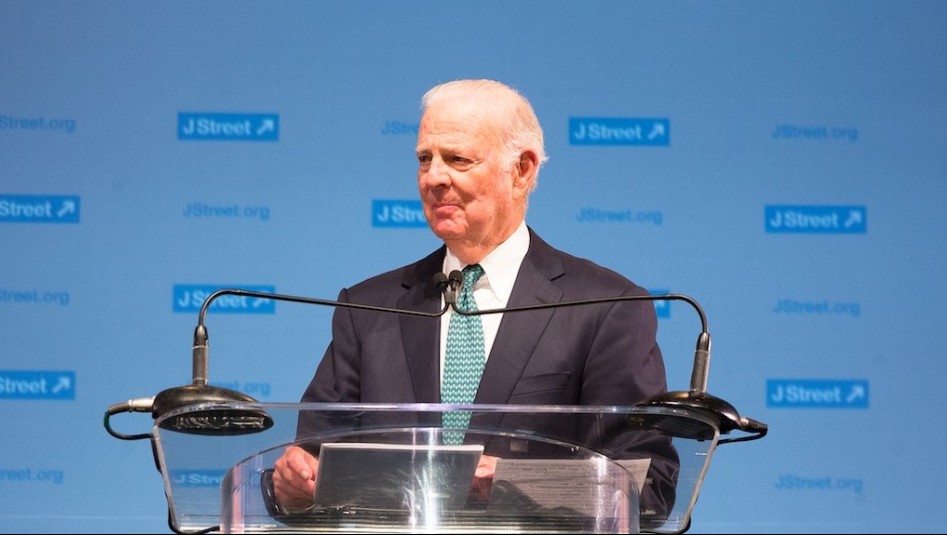
US former Secretary of State James Baker addresses the J Street conference in Washington, March 23, 2015. (Photo credit: J Street/JTA)
US former secretary of state James Baker addresses the J Street conference in Washington, March 23, 2015. (photo credit: J Street/JTA)
Earlier in the day, Bush distanced himself from former secretary of state James Baker, who is currently one of his foreign policy advisers, CNNreported.
Baker, who is believed to have said “F*** the Jews” while serving as secretary under Bush’s father, George H.W. Bush, criticized Israeli Prime Minister Benjamin Netanyahu at the recent J Street conference.